Reality Forgers
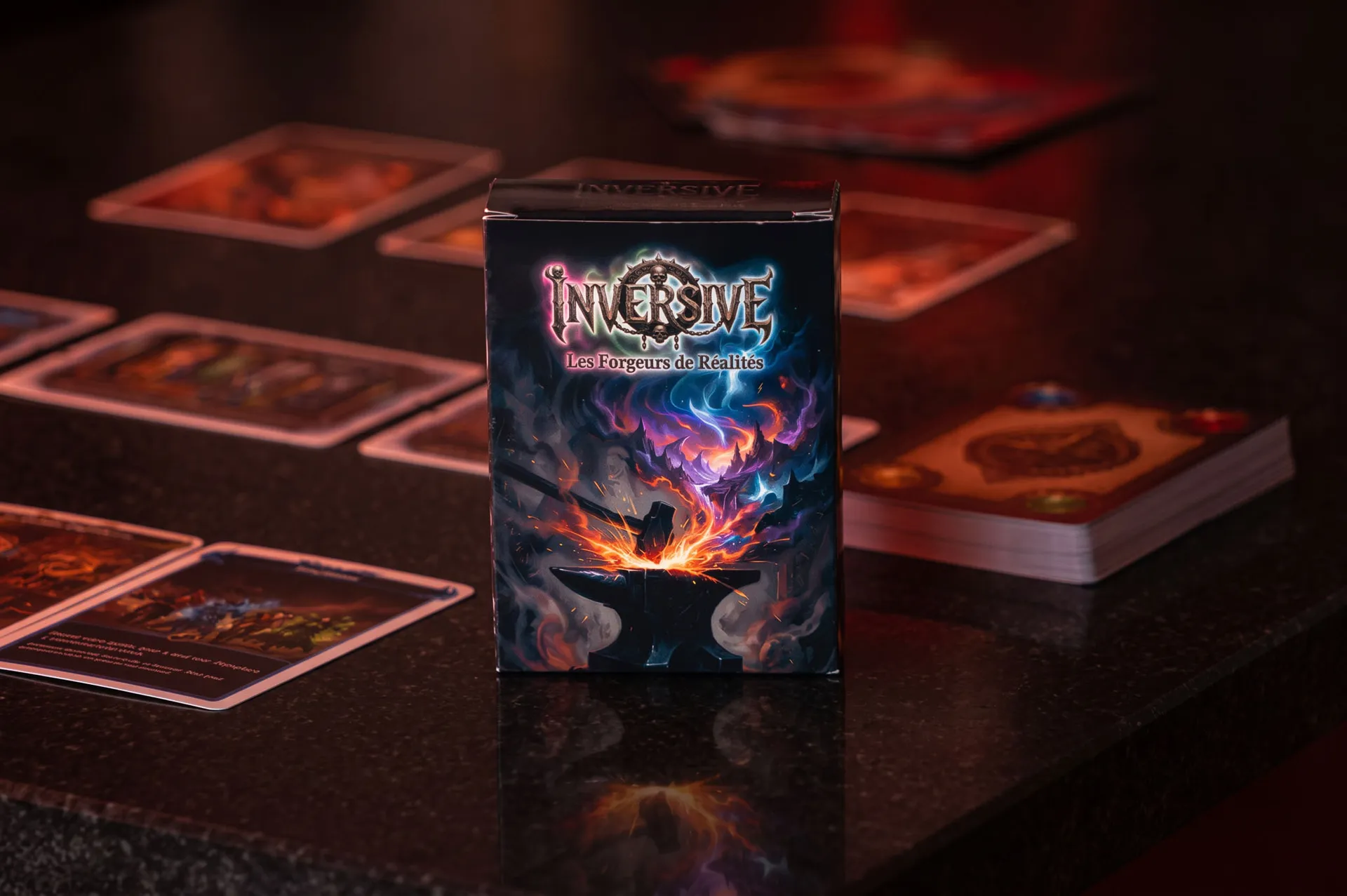
Designed and self-published a physical card game that turns the business of a production studio into a heroic-punk guild, with the people of Inversive as its heroes. Printed in a run of 36 and never meant to break even: an end-to-end excursion into an object I had never produced.
Read the rules and browse the Grimoire
The guild is the studio
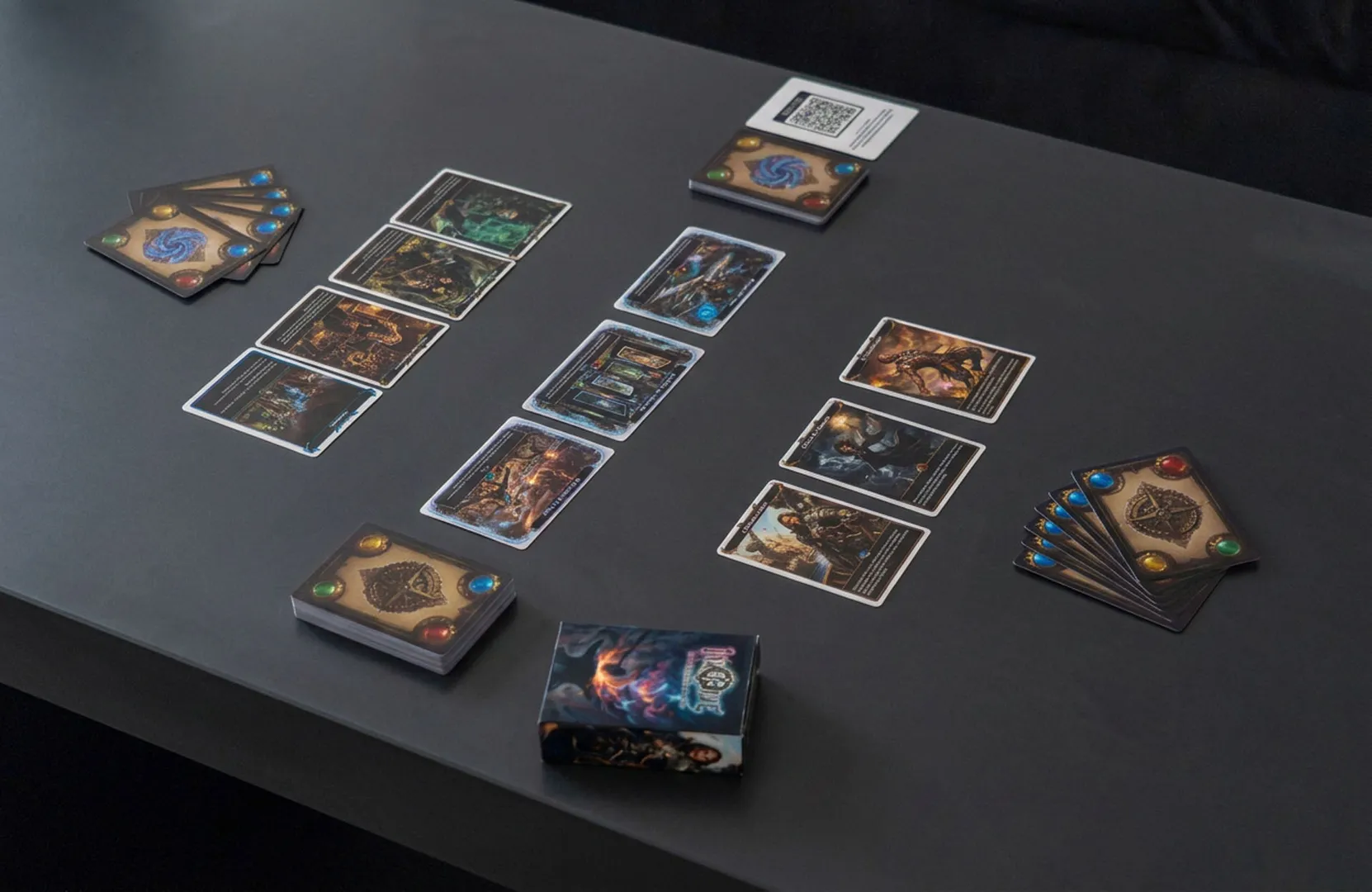
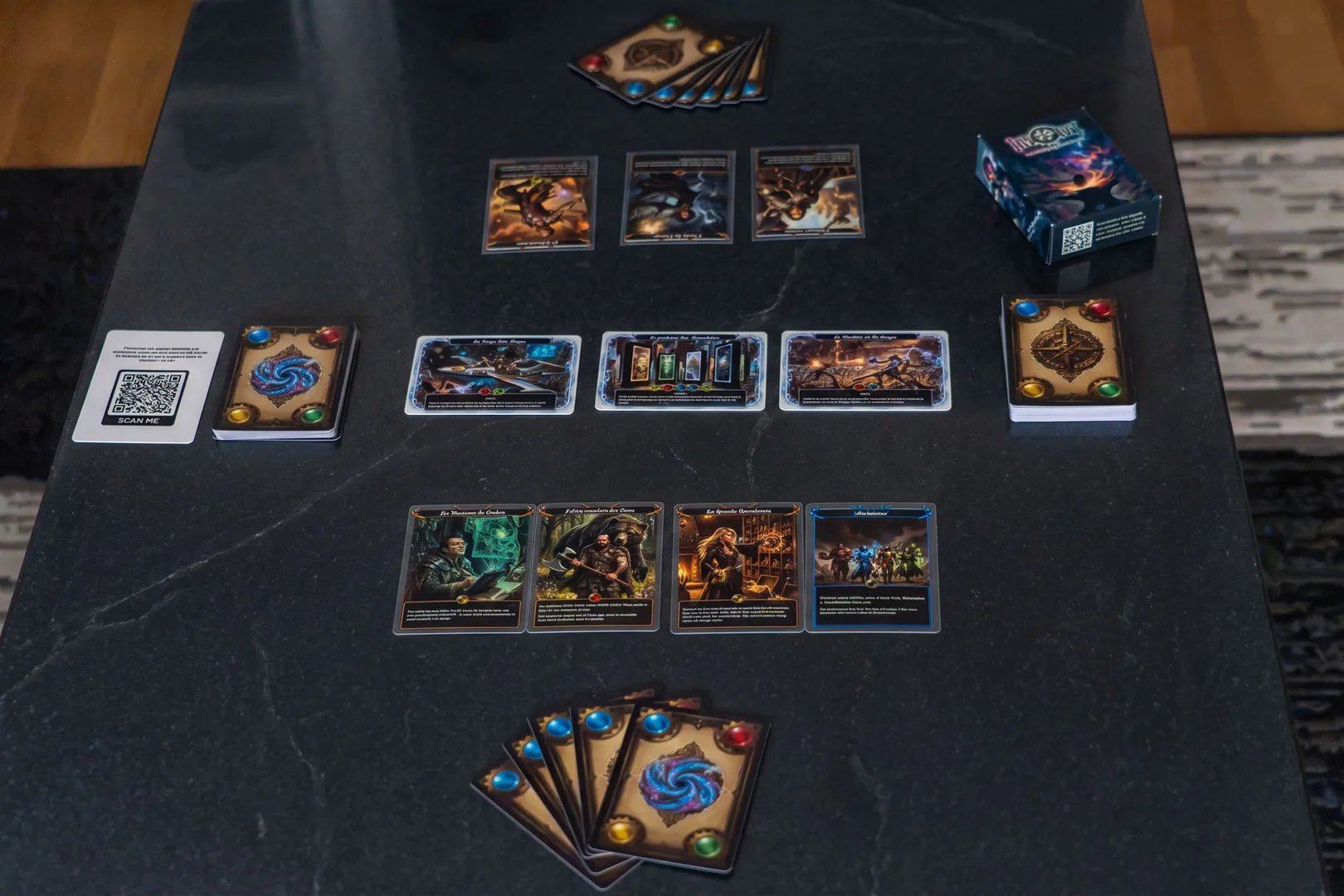
Reality Forgers casts each player as a Guild Master. You recruit Arcanists, assign them to Pocket Dimensions waiting to be forged, and race your rivals to a thousand kilo-Ether. Strip away the heroic-punk vocabulary and what is left is the business of a production studio: nothing ships until the right skills are on it at the same time, and someone is always spending their turn getting in your way.
Four classes, four disciplines
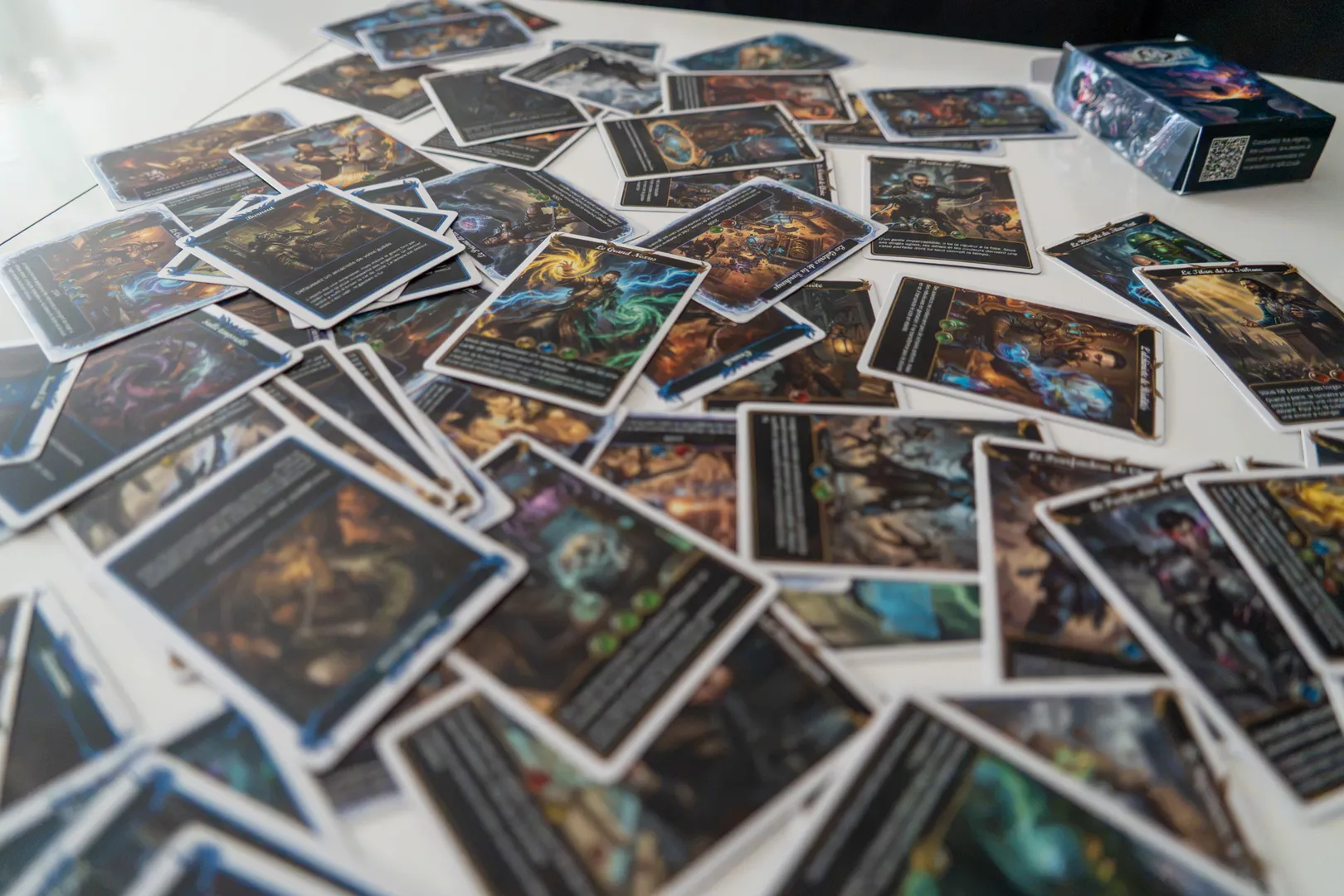
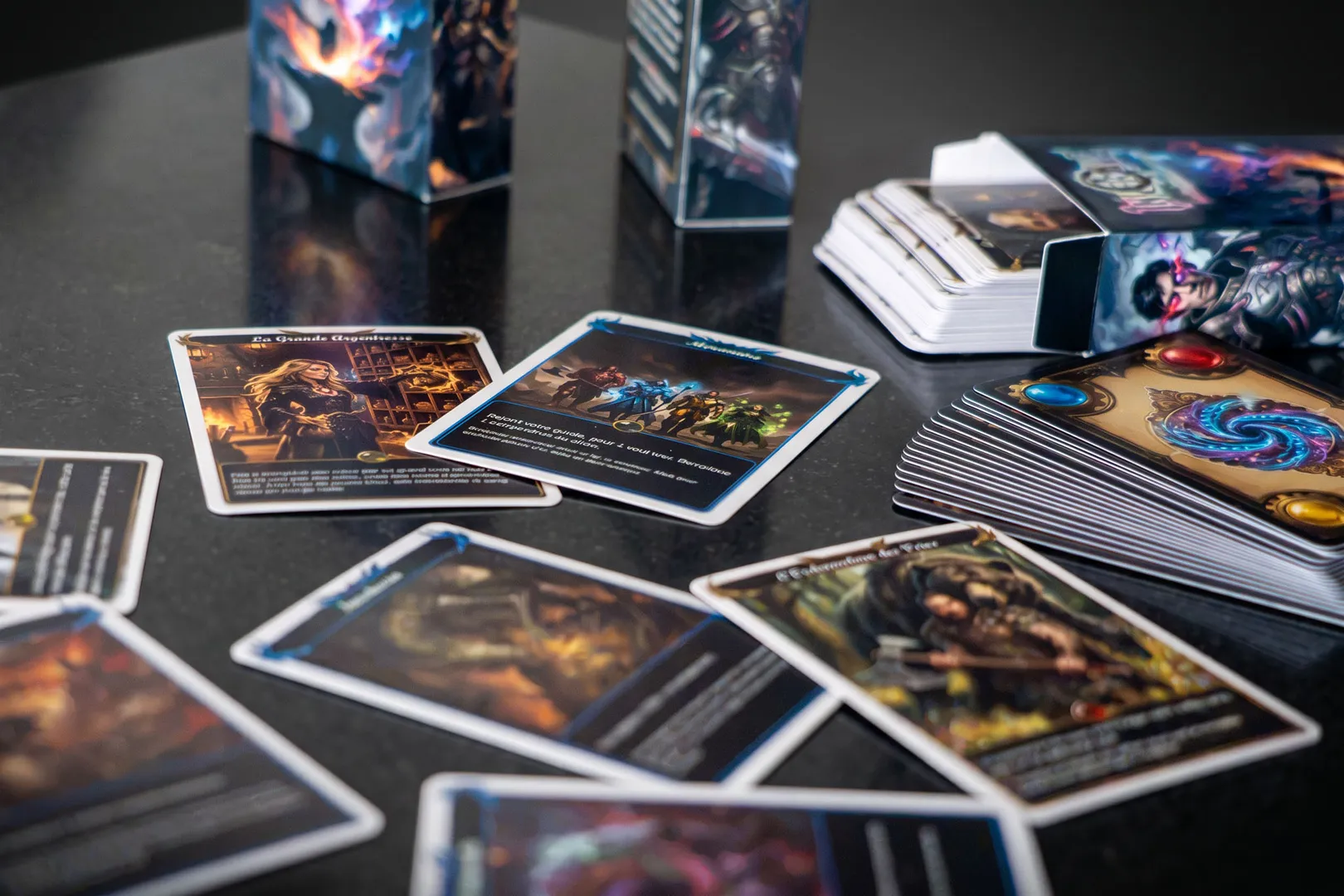
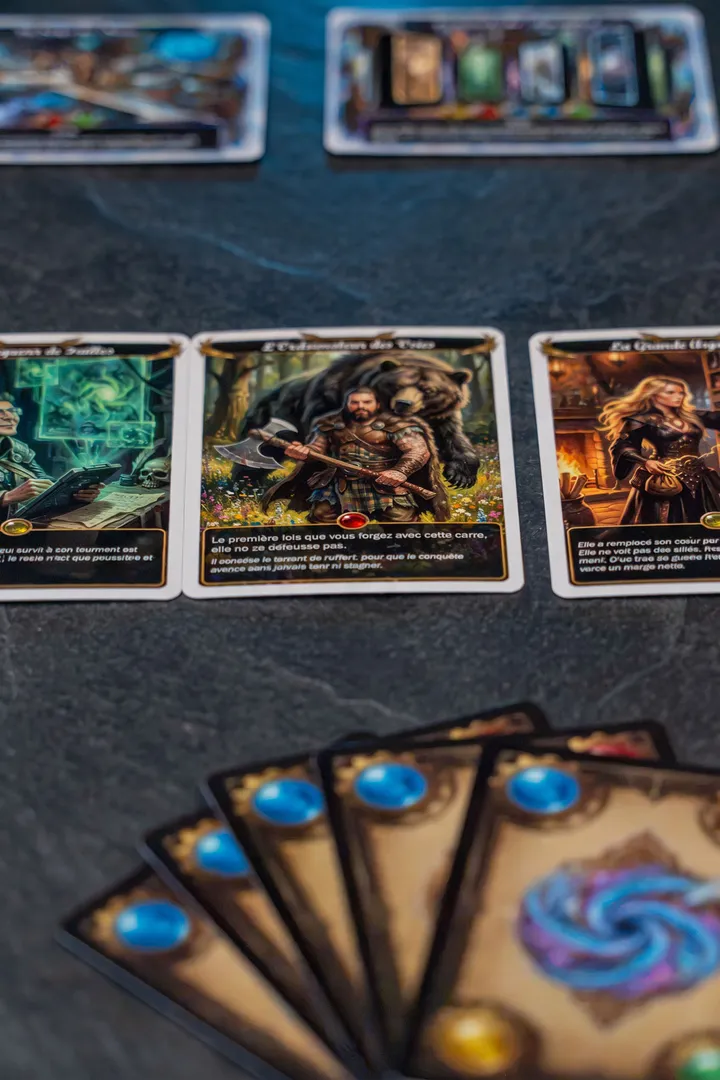
The twenty-four Arcanists of the Grimoire are the people of Inversive, each one drawn as a hero of the guild. They fall into four classes, and the split is the studio's own:
- Négociateur Runique, who pacts for the big contracts
- Techno-Mage, who weaves the raw code of reality
- Oniro-Tisseur, who sculpts dreams and perceptions
- Oracle, who coordinates the complex flows of energy
Every Quest lists the icons it demands, and no single class can satisfy one alone. Winning means staffing a project properly, which is the joke and the design at the same time.
Three actions a turn
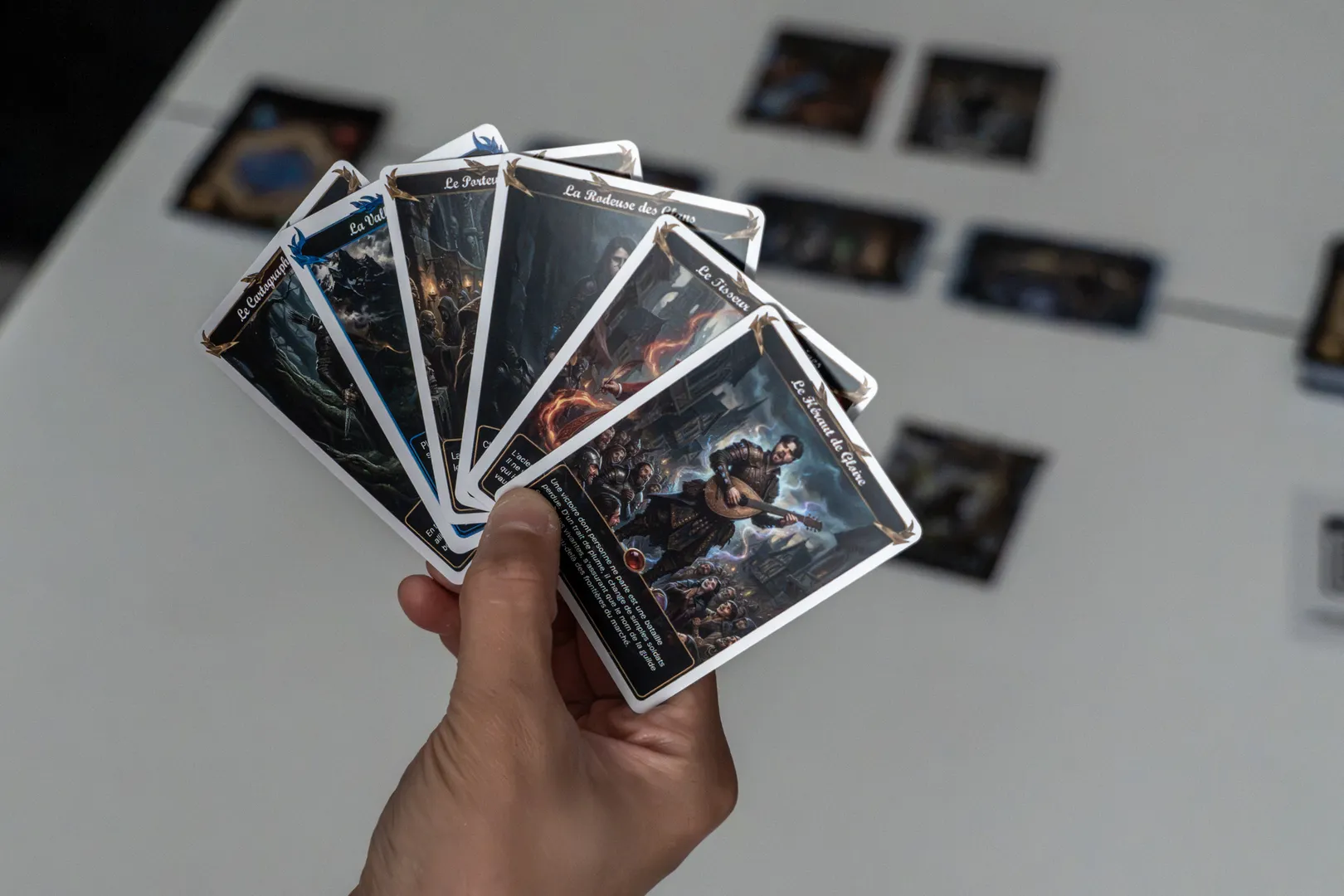
Two to three players, ten to twenty minutes, seventy-two cards. A turn buys three actions: deploy an Arcanist, forge a Quest whose icons you now cover, meditate to trade two cards for a fresh one, or disrupt a rival for the price of two. That last figure carries the tension. Sabotage costs two thirds of a turn you were going to spend building, so the real question each turn is whether the leader is far enough ahead to be worth the delay.
From universe to print run
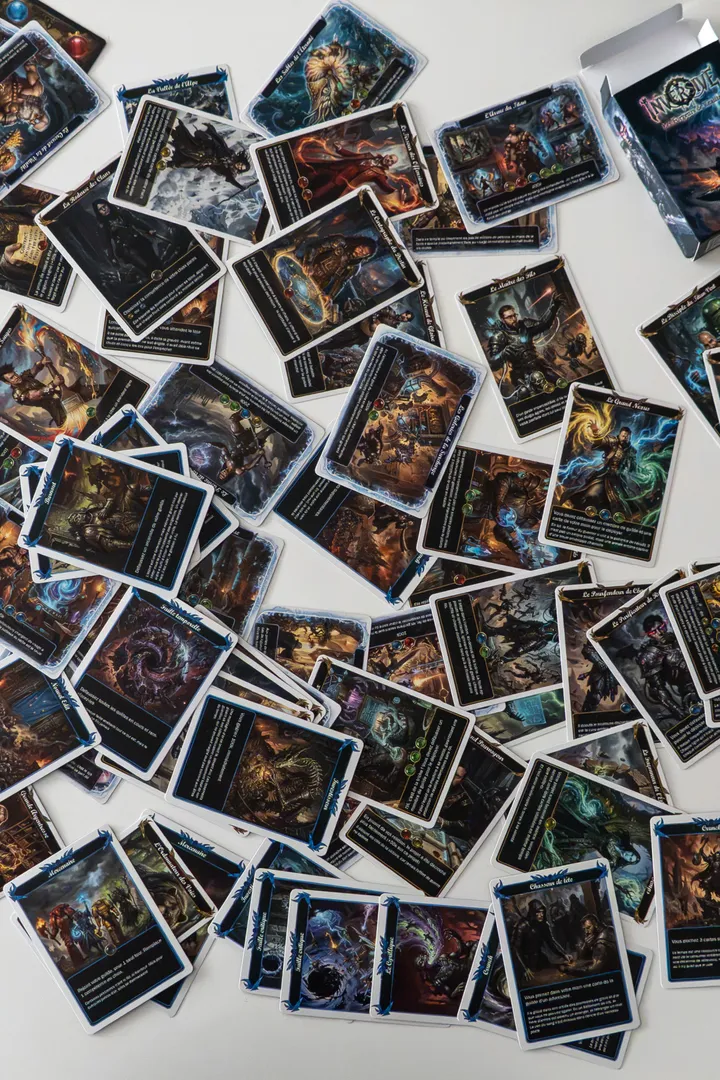
Everything downstream of the idea was the point of the exercise: the universe and its vocabulary, the balance passes, the card art, an icon system legible at thumbnail size, the layouts, the print specification, the packaging, and a companion site that carries the rules and lets anyone browse the full Grimoire card by card. Producing a physical object end to end is a different discipline from shipping software. Nothing is patchable after the press run, and a rule that reads ambiguously on a card stays ambiguous in thirty-six boxes. That constraint is what I came for.
Contact sheet · 07